No credit card required
 Thank you for your request. We will contact you shortly.



Hospital Staff Duress Systems Powered by Healthcare RTLS
Hospital Staff Duress Systems Powered by Healthcare RTLS
Healthcare workers face unpredictable, high-pressure situations every single day. From managing aggressive patient encounters to responding to sudden medical emergencies, the risk of a staff duress event is ever-present — and growing. Workplace violence in healthcare settings is on a steady rise, making the deployment of a reliable, intelligent staff duress system not just a best practice, but a patient and staff safety imperative.
Modern healthcare RTLS (Real-Time Location System) technology is redefining how hospitals respond to these challenges — and in this guide, we break down exactly how.
What Is a Staff Duress System — and Why Does Healthcare Need One Now?
A staff duress system is a technology-enabled safety solution that allows hospital employees to send an immediate distress alert when they feel threatened, unsafe, or in need of urgent assistance. Unlike traditional panic buttons or radio-based systems, a modern staff duress RTLS solution combines the alert with precise, real-time location data — so security teams don’t just know that something happened, they know exactly where.
The need is urgent. Workplace violence in healthcare is not slowing down — it is accelerating. Nurses and frontline staff report feeling unsafe during night shifts, in isolated corridors, or during high-acuity patient interactions. Traditional security systems are reactive, not preventive. Healthcare RTLS changes this equation by making staff safety proactive, data-driven, and scalable across an entire facility.
How Healthcare RTLS Tracking Works for Staff Protection
Healthcare RTLS tracking uses a network of wireless sensors, access points, and wearable tags to determine the real-time location of staff members anywhere within a hospital — down to the room level. This infrastructure is now being extended to address one of healthcare’s most pressing human challenges: staff duress.
Here’s how the system works end to end:
1. Wearable Staff Safety Tags
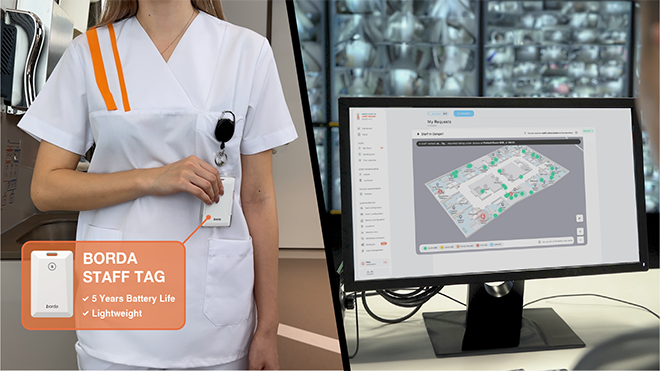
Hospital staff are issued lightweight, RTLS-enabled Staff Safety Tags designed to be worn comfortably throughout their shifts. These tags clip to a collar, badge lanyard, or uniform and work continuously in the background — no activation required for location tracking. Built for the demands of clinical environments, the tags carry a 5-year battery life, ensuring long-term reliability without the burden of frequent replacements.
2. One-Touch Panic Alert
At the heart of every effective staff duress technology solution is simplicity. When a nurse, physician, technician, or any healthcare employee feels threatened, they press a single button on their wearable tag. That’s it.
This single action activates a white code alarm within the hospital’s security system, instantly transmits the staff member’s precise location to security personnel, and initiates a timestamped incident log for documentation and compliance.
3. Real-Time Location Broadcast
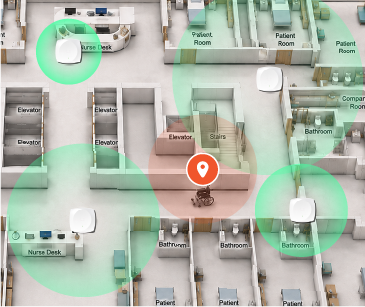
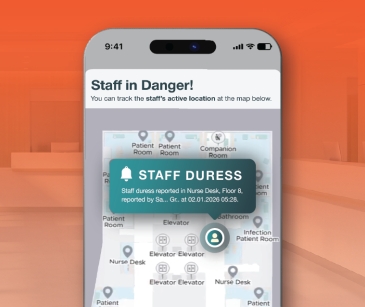
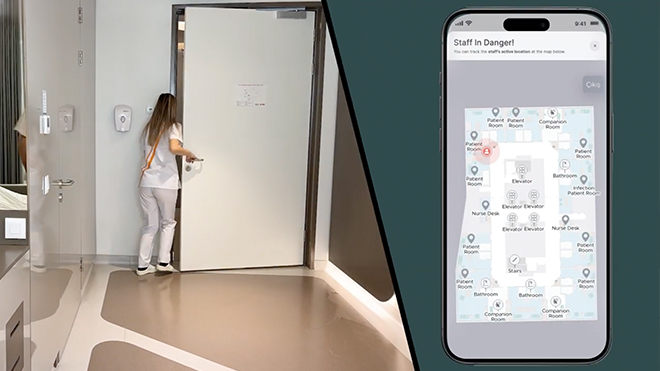
The moment the alert fires, RTLS staff tracking kicks in with continuous location updates. Security can monitor the staff member’s movements in real time on a digital map — whether they’re moving, stationary, or have changed floors. This is especially critical in large hospital campuses where response time is directly tied to location accuracy.
4. Security Team Response
Armed with real-time location data, security personnel can respond instantly and without delay. There is no lag, no manual routing, no guesswork — responders know exactly where to go the moment an alert is triggered.
Key Features of an Effective Staff Duress RTLS Solution
Not all staff duress systems for hospitals are created equal. When evaluating solutions, look for these critical capabilities:
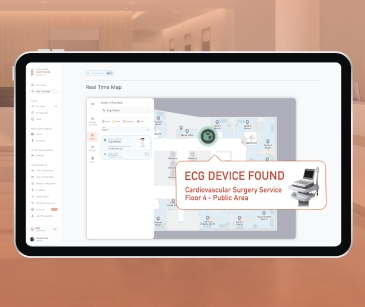
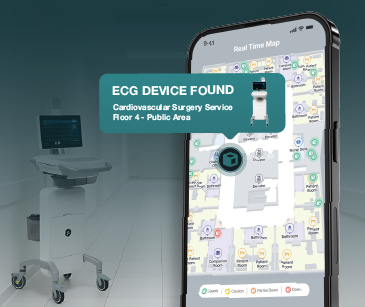
Real-Time Map View — A live, floor-plan-based display that shows the exact location of a duress event as it unfolds, with continuous updates throughout the incident.
White Code Alarm Integration — Seamless triggering of your hospital’s existing white code alarm protocols, ensuring all stakeholders are notified simultaneously.
Integration with Existing Security Infrastructure — The best hospital RTLS solutions integrate with existing security systems such as CCTV, without requiring a full infrastructure replacement.
Long-Life Wearable Tags — Staff Safety Tags are engineered with a 5-year battery life, reducing maintenance overhead and ensuring the system remains operational across long deployment cycles without interruption.
Badge-Friendly Form Factor — Staff won’t use safety technology if it’s uncomfortable. The best healthcare staff duress tags are lightweight, durable, and designed for 12-hour clinical shifts.
Hospital Staff Safety: Beyond the Emergency
A hospital staff safety strategy built on healthcare RTLS delivers value well beyond incident response.
Reducing Nurse Duress and Burnout
Nurse duress is one of the leading contributors to burnout and turnover in the U.S. healthcare system. When nurses know that help is one button press away — at any hour, in any part of the building — their psychological safety dramatically improves. This translates to lower turnover, higher satisfaction scores, and better patient care.
Creating a Culture of Safety
Deploying a staff duress system sends a powerful organizational message: your people come first. This cultural shift builds trust between hospital leadership and frontline staff, contributing to a more resilient, engaged workforce.
Quantifiable ROI
A well-implemented hospital staff safety program reduces workers’ compensation claims stemming from workplace violence incidents, lowers liability exposure, and decreases agency staffing costs driven by improved retention. Faster, more accurate incident documentation also strengthens your position during insurance reviews and accreditation processes.
Workplace Duress RTLS: Addressing the Full Spectrum of Threat
Workplace duress technology in healthcare must account for a wide range of scenarios — not just physical aggression. A comprehensive workplace duress RTLS solution protects staff from patient or visitor aggression, verbal threats, medical emergencies while alone, and unsafe conditions in isolated areas like parking structures or stairwells.
RTLS for staff protection answers the two critical questions simultaneously: who needs help, and exactly where are they.
Healthcare Duress Alerting: From Signal to Action in Seconds
Healthcare duress alerting is only effective when the signal triggers a fast, coordinated response. Modern staff duress RTLS platforms minimize the gap between alert and arrival through automated dispatch notifications pushed to security radios, mobile devices, or command center screens, and live location streaming so responders can intercept a moving staff member anywhere across a multi-story facility.
The Future of Healthcare RTLS and Staff Duress Technology
The next generation of staff duress technology will incorporate AI-powered anomaly detection, wearable biometric integration, predictive risk mapping, and deeper EHR/EMR connectivity. As these capabilities mature, hospital RTLS will shift from a reactive safety tool to a truly predictive, intelligence-driven platform — reshaping what hospital staff safety means in modern healthcare.
See It in Action
Curious how a modern staff duress system powered by healthcare RTLS can transform staff safety in your facility? Discover how real-time visibility, instant alerts, and seamless integration can elevate your operations and protect your teams.
👉 Request a demo now: https://bordatech.com/demo-request
03 September, 2026







 Thank you for your request. We will contact you shortly.